Review: Patients in Medical Masks Sitting for Embroidery
As a designer who spends half my life staring at digitized files and the other half watching needles punch through fabric, I have learned to be skeptical of vector illustrations marketed for web use. We often see Illustrations and Graphics that look crisp on a screen but turn into a tangled mess under the presser foot. However, when I pulled up the file for Patients in Medical Masks Sitting, my initial reaction was one of cautious optimism. This isn’t just another generic clipart bundle; it is a specific, timely visual narrative that requires careful handling to translate from a flat color vector into a tactile embroidery project.
The Visual Personality and First Impressions
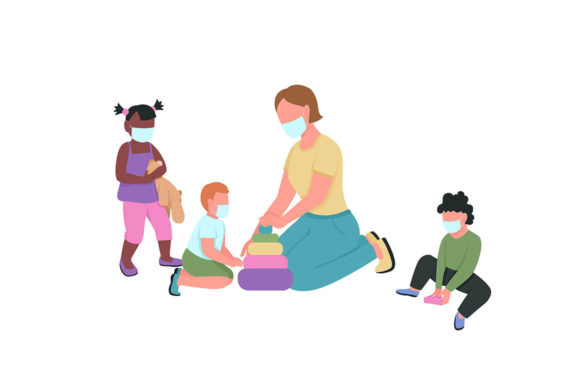
The design features faceless characters waiting on a bench, clad in medical masks. The mood is calm, patient, and universally relatable. For an embroidery designer, the "faceless" aspect is actually a gift. It removes the need for intricate facial features, which are notoriously difficult to stitch cleanly without high-density satin stitches or complex fill patterns. The silhouette-based approach means we are dealing with bold shapes rather than fragile details.
When evaluating this as a potential asset for a craft business, the simplicity stands out. The flat color style suggests that the original creator prioritized clarity over shading. In embroidery terms, this usually translates well to block fills and clean running stitches. However, because the source material is described as a vector for web graphic design and animation, we must assume the lines are mathematically perfect but not necessarily optimized for thread. There is no thread tension in a SVG file, but there is plenty of it in your machine.
Real-World Application: The Custom Tote Bag Scenario
To truly test the viability of Patients in Medical Masks Sitting, I imagined a real client request. A local clinic wanted branded tote bag designs for their staff appreciation week. They needed something that acknowledged the pandemic era without being overly clinical or sterile. This design fits that brief perfectly. It humanizes the waiting experience.
If I were stitching this onto a canvas tote, I would lean into the graphic nature of the piece. The bench provides a strong horizontal anchor, while the sitting figures create vertical interest. For a handmade product like this, I would avoid trying to replicate every subtle curve of the vector. Instead, I would simplify the mask edges into straighter lines to ensure the satin stitch lays flat and doesn’t pucker the fabric. The result would be a modern, minimalist embroidered patch feel, even if it is stitched directly onto the bag.
Apparel and Personalized Gifts
Beyond totes, this design has strong potential for custom apparel. Imagine this stitched on the back of a lightweight hoodie or a nurse’s scrub top. The theme resonates deeply with healthcare workers. As a personalized gift, it could be paired with a name or date below the bench. However, caution is required here. The description notes these are "flat color" characters. If you plan to use multiple thread colors for the clothing of the patients, you must check the thread colors against the background fabric. High contrast is key. A dark navy shirt needs light thread for the masks to remain visible, whereas a white lab coat might require darker outlines to define the shapes.
For baby embroidery or nursery decor, the theme might feel too specific to current events, but the composition itself—figures sitting together—is timeless. If adapted for a pillow cover or a baby blanket, I would recommend softening the palette. Pastel blues and greys for the masks and clothing can transform the image from a medical statement into a gentle scene of community and care.
Technical Challenges and Fabric Considerations
While the design is visually appealing, translating a web-ready vector into a durable machine embroidery design requires technical vigilance. Here are the critical areas where things can go wrong:
- Stitch Density: Vector files do not have stitch density. If you auto-digitize this file, the software might pack too many stitches into the solid blocks of the bench or the masks. This leads to stiff, cardboard-like patches that ruin the drape of a sweatshirt embroidery project. Always manually adjust the density to allow the fabric to breathe.
- Small Details: The straps of the medical masks are likely thin in the vector. On fabric, these can easily disappear or break during washing. I recommend widening these lines slightly in your digitizing software or using a single run of running stitch instead of a satin column if the scale is small.
- Fabric Texture: This design relies on clean edges. It will struggle on highly textured fabrics like terry cloth or heavy wool unless you use a substantial cut-away stabilizer. For smooth cottons or poly-blends, it will shine.
- Curved Surfaces: Stitching this on a cap is risky. The horizontal bench line may distort when applied to the curved front panel of a hat. It is better suited for flat panels like tote bags, aprons, or the back of jackets.
Commercial Viability for Etsy Sellers
For the Etsy seller or small shop owner, this design offers a niche appeal. It is not a generic flower or monogram frame. It speaks to a specific moment in time and a specific profession. This specificity can drive higher engagement from buyers looking for meaningful holiday embroidery gifts for nurses, doctors, or hospital staff.
However, you must verify the licensing. The product description mentions it is a ZIP file containing vectors for web and animation. It does not explicitly state that it includes native embroidery formats like PES, DST, or JEF. If you are buying this as a graphic to convert yourself, ensure you have the right to create derivative works for commercial sale. If you are looking for a ready-to-stitch digital embroidery file, you may need to digitize it yourself or hire a professional. Never assume a vector license covers physical goods without checking the terms.
Final Designer Notes
Before committing to a full production run, always test the design on scrap fabric identical to your final product. Check how the fill stitch behaves on the specific material. Create a black-and-white mockup to ensure the shapes are recognizable without color reliance. If the masks blend into the faces in grayscale, you need to add outline stitches for definition.
Patients in Medical Masks Sitting is a strong candidate for modern, narrative-driven embroidery. It moves beyond decoration into storytelling. With careful attention to stitch density and fabric choice, it can elevate a simple small shop product into a memorable piece of wearable art. Treat it not just as a graphic, but as a structural element of your textile design, and it will reward you with clarity and impact.